
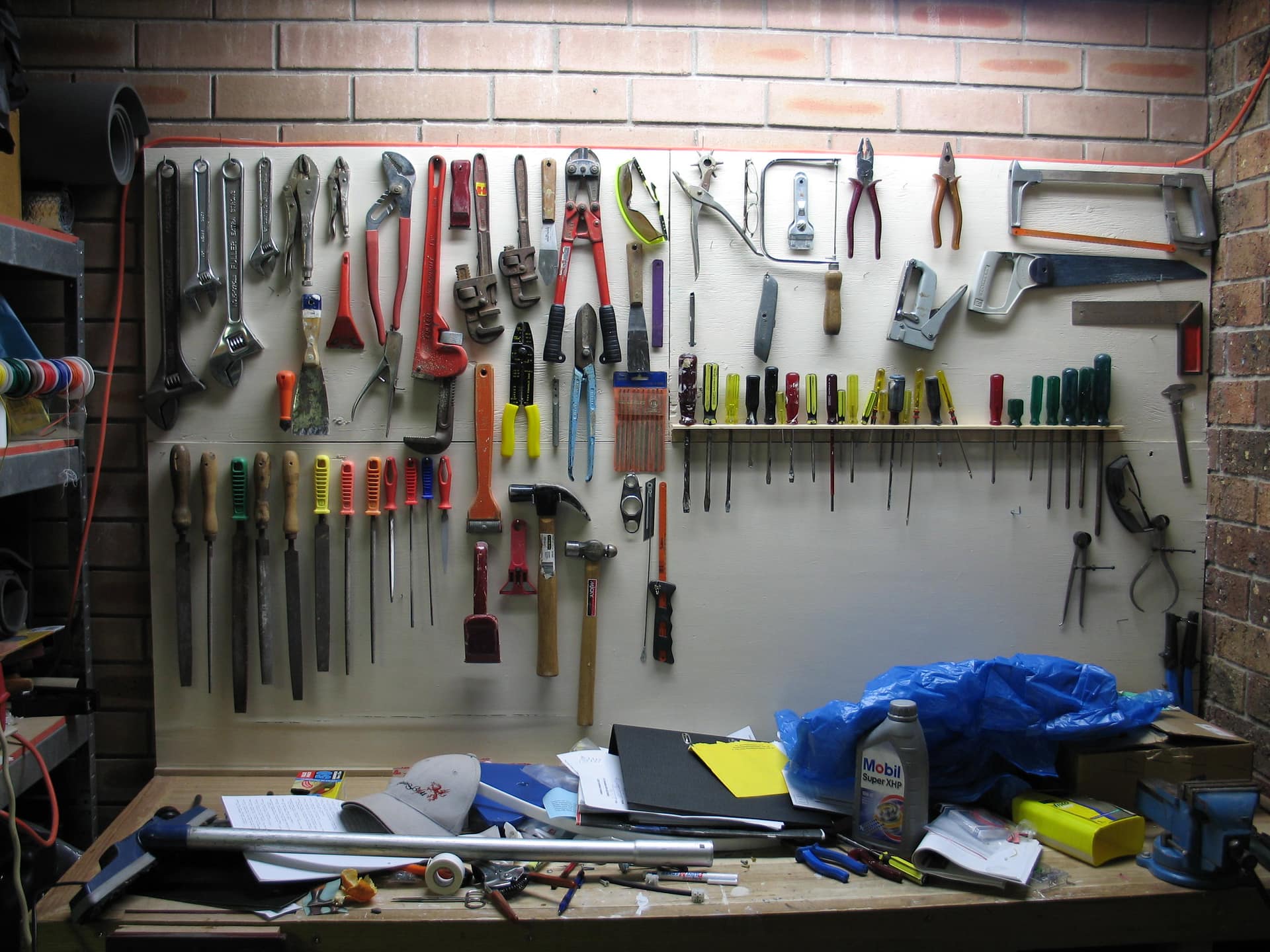
Congratulations on the keys. Along with the joy of a home of your own comes the small stuff: a loose doorknob, a picture to hang, a flat-pack bookcase in a hundred pieces. You do not need a garage full of equipment to handle it. These new homeowner toolkit essentials are nine versatile tools that cover most first-year jobs, plus one bonus tool for older Hudson Valley houses and the safety basics every owner should know in the first week.
The 9 new homeowner toolkit essentials
1. A cordless drill/driver
The workhorse. It drives screws for furniture assembly, curtain rods, shelves and brackets, and drills pilot holes and holes for anchors. A job with thirty screws takes minutes instead of an hour. A compact model with two batteries is enough for most homes.
2. A multi-bit screwdriver
For the jobs where a drill is too much: cabinet hinges, switch plates, a loose doorknob, battery doors on smoke alarms and remotes. One handle with interchangeable Phillips and flat bits replaces a drawer of loose screwdrivers.
3. A 16-ounce claw hammer
Drives nails for pictures and trim, taps things into place, and the claw pulls bent or misplaced nails. Sixteen ounces is a good all-purpose weight.
4. A 25-foot tape measure
Measure before you buy, before you move furniture and before you hang anything. Will the sofa fit through the door? Where is the center of the wall? A 25-foot locking tape covers nearly any room.
5. Pliers: needle-nose and groove-joint
Needle-nose pliers reach into tight spaces and hold small parts. Groove-joint pliers (often called channel-lock or plumber's pliers) grip the large slip nuts under kitchen and bath sinks, where many small drips start.
6. An adjustable wrench
One wrench that fits a wide range of nuts and bolts: furniture with bolts, a wobbly table leg, supply-line fittings, lawn equipment. A 10-inch size is a good first choice.
7. A utility knife
Safer and far more effective than kitchen scissors. It breaks down moving boxes, opens packaging, trims carpet and scores drywall for small patches. Buy spare blades; a sharp blade is a safer blade.
8. An electronic stud finder
Drywall alone will not hold a TV, a large mirror, floating shelves or a grab bar. A stud finder shows where the framing is so heavy items go into wood, or tells you when you need the right anchor instead.
9. A headlamp
Most repairs in dark places need both hands: under a sink, behind the washer, at the breaker panel, in the attic. A headlamp puts light where you look and keeps your hands free.
The Hudson Valley bonus tool: a caulking gun
Many homes here are older, and older windows, trim and baseboards leak air. A caulking gun and a tube of the right caulk seal those gaps before winter. ENERGY STAR notes that simple fixes like caulking around windows and weatherstripping doors are part of sealing and insulating a home, which can save up to 10% on annual energy bills (ENERGY STAR).
Safety basics for your first week
Tools fix things; these steps prevent the expensive problems.
- Find your shut-offs. Locate the main water shut-off valve, the breaker panel and, if you have gas, the gas meter valve. Label the breakers if they are not labeled. When a pipe bursts, knowing where the valve is matters more than any tool.
- Check the smoke alarms. Since April 1, 2019, new or replacement smoke alarms sold in New York must have a sealed, non-removable 10-year battery or be hard-wired (New York Department of State). Test each one and note the manufacture date.
- Check the carbon monoxide alarms. Under Amanda's Law, New York homes with a fuel-burning appliance or an attached garage must have CO alarms; in existing one- and two-family homes the minimum is one on the lowest story with a sleeping area (Town of Cortlandt summary of Amanda's Law).
- Call 811 before you dig. Planting a tree, setting a fence post or installing a mailbox? Outside New York City and Long Island, submit a free locate request with UDig NY online or by calling 811, and member utilities respond within two business days (UDig NY).
Common jobs you can now handle
- A loose doorknob, hinge or cabinet handle
- A small drip at the slip nut under a sink
- Assembling a bookcase or bed frame
- Hanging a level gallery wall, or a TV mounted into studs
- Sealing a drafty window before winter
For the seasonal routine that keeps a house in shape, use our seasonal home maintenance checklist; when you are ready for small upgrades, see high-ROI home improvements under $1,000.
Building your toolkit
- One trip. Take this list to a local hardware store and buy it in one visit; staff can point you to durable mid-range options.
- The housewarming list. When friends and family ask what you need, send them this page.
- One place for everything. A sturdy toolbox or canvas bag, kept in the same spot, means the right tool is there when you need it.
For the bigger jobs that call for a licensed professional, our help does not end at closing. If you need a recommendation for a painter, plumber or electrician in the Hudson Valley, get in touch. Still shopping for the house itself? Start with our buying guide.
Frequently asked questions
What tools should a new homeowner buy first?
A cordless drill/driver, a multi-bit screwdriver, a claw hammer, a tape measure, needle-nose and groove-joint pliers, an adjustable wrench, a utility knife, a stud finder and a headlamp. In an older house, add a caulking gun.
What should be in a basic home repair kit?
The nine tools above, plus picture-hanging hardware, wall anchors, spare screws, plumber's tape, a level, and spare batteries for anything that still takes them.
What is the first thing to do in a new house?
Find the main water shut-off, the breaker panel and the gas valve, then test the smoke and carbon monoxide alarms and change the locks or rekey them.
Do I need to call before digging in my yard in New York?
Yes. Outside New York City and Long Island, submit a free request with UDig NY or call 811 before you dig, and wait for the utilities to mark their lines.
Sources
- ENERGY STAR, seal and insulate
- New York Department of State, residential smoke alarm sales requirements
- Town of Cortlandt, NY, Amanda's Law carbon monoxide alarm requirements
- UDig NY, call 811 before you dig
Checked against these sources on September 24, 2026.
Keep reading
9 High-ROI Home Improvements You Can Tackle for Under $1,000 
March 25, 2026
9 High-ROI Home Improvements You Can Tackle for Under $1,000
Lower Your Energy Bills: 9 Efficiency Tips for New York Homeowners 
October 8, 2025
Lower Your Energy Bills: 9 Efficiency Tips for New York Homeowners
Your Essential Seasonal Home Maintenance Checklist for Hudson Valley Homes 
September 30, 2025
Your Essential Seasonal Home Maintenance Checklist for Hudson Valley Homes
Have a question this post did not answer?
We answer seven days a week. Ask about this article, or anything else across the Hudson Valley.